
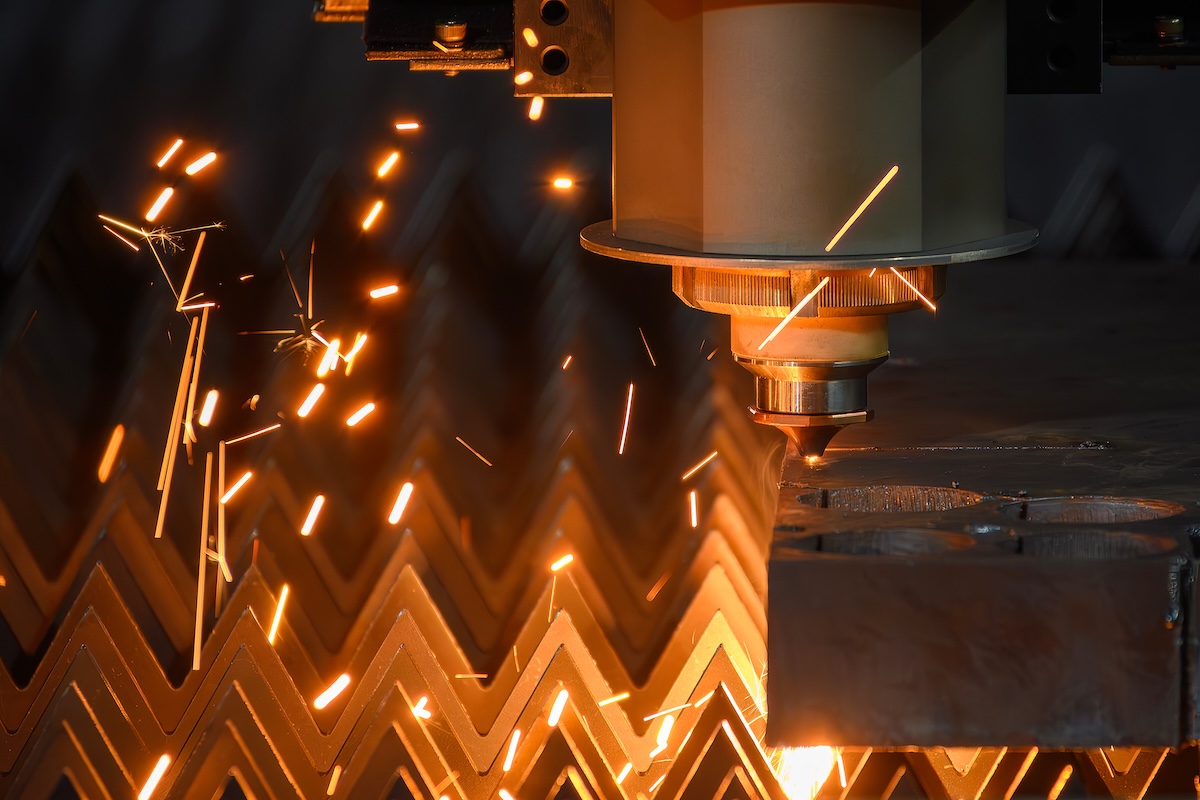
When it comes to precision laser cutting, the quality of a finished part depends on more than just accurate dimensions. The condition of the cut edges also plays an important role in how a component looks, fits, and performs. One factor that can affect those edges is dross. Dross is a common consideration in metal laser cutting, but excessive dross can create additional work, interfere with assembly, and affect the overall quality of a finished component. So, what exactly is dross in laser cutting, what causes it, and why does controlling it matter?
What Is Dross in Laser Cutting?
Dross is unwanted material that accumulates along the cut edge, typically on the underside of a metal sheet or plate during laser cutting. As the laser cuts through the metal, it melts material along the cutting path. Assist gas helps push that molten material out of the cut. However, if some of the molten metal is not completely removed, it can cool and solidify along the edge of the workpiece. The result is dross, which may appear as small beads, rough deposits, or hardened material attached to the bottom of the cut. While some cutting conditions are more prone to dross formation than others, excessive buildup can indicate that the cutting process needs adjustment.
What Causes Dross During Laser Cutting?
Several factors can contribute to dross formation. Understanding these variables is important for maintaining consistent cut quality.
Cutting Speed
Cutting speed influences how much energy is delivered to the material and how effectively molten metal is removed. If the laser moves too slowly or too quickly for the material and cutting conditions, it can contribute to poor melt removal and dross formation. Finding the appropriate cutting speed helps produce a cleaner, more consistent edge.
Laser Power and Focus
Laser power and focus position affect how energy is distributed through the material. Improper settings may prevent the laser from cutting efficiently or make it more difficult to remove molten material from the cut. Accurate focus and appropriate power settings are particularly important when working with different material thicknesses.
Assist Gas Pressure and Flow
Assist gas plays an important role in laser cutting by helping remove molten material from the cutting area. If gas pressure, flow, or nozzle alignment is not appropriate for the application, molten material may remain along the edge and solidify. The type of assist gas used can also influence cutting behavior and edge quality.
Material Type and Thickness
Different metals respond differently to laser cutting. Carbon steel, stainless steel, and aluminum have different thermal properties, and each may require adjustments to cutting parameters. Material thickness also affects the amount of molten metal that must be removed during the cutting process. As thickness increases, maintaining a clean edge may become more challenging.
Equipment Setup and Condition
Nozzle condition, beam alignment, focus, and other machine settings can influence cutting performance. Even with capable laser cutting equipment, proper setup and process control are necessary to achieve consistent results.
How Does Dross Affect Cut Quality?
Dross may seem like a minor issue, especially when the deposits are small. However, unwanted material along a cut edge can create complications during subsequent manufacturing processes.
Dimensional Accuracy and Fit
Excessive dross can interfere with how a component fits against another surface or connects to an adjoining part. Even when the primary cut dimensions are correct, hardened material along the edge may prevent the component from seating or aligning as intended.
Additional Finishing Requirements
Depending on the application, dross may need to be removed through grinding, deburring, or other finishing methods. These additional operations can increase handling time, labor, and overall production costs.
Welding and Assembly
For components that will be welded or assembled, clean edges can be particularly important. Dross may interfere with proper fit-up or require removal before welding. Addressing edge quality during the cutting process can help reduce unnecessary preparation during later manufacturing stages.
Appearance and Surface Quality
Visible dross can also affect the appearance of a finished part, particularly when components will remain exposed or require a specific surface finish. For manufacturers producing parts with defined quality requirements, edge condition is an important part of the overall result.
How Can Dross Be Reduced in Laser Cutting?
Reducing dross requires more than simply increasing laser power or slowing down the cutting process. Effective process control involves selecting appropriate parameters for the material, thickness, and part geometry.
This may include:
- Adjusting cutting speed and laser power
- Optimizing focus position
- Selecting appropriate assist gas settings
- Maintaining proper nozzle condition and alignment
- Monitoring cut quality and making adjustments when necessary
Because these variables interact with one another, adjustments must be made with the overall cutting process in mind. The goal is to produce components that meet the required specifications while minimizing unnecessary finishing and rework.
Why Cut Edge Quality Matters Beyond Laser Cutting
For many manufacturers, laser cutting is only the first step in producing a finished component. A laser-cut part may eventually be bent, rolled, welded, machined, or incorporated into a larger assembly. When cut edges are consistent and free of excessive dross, these downstream processes can become more efficient.
For example, a component that will be welded may require less edge preparation when the initial cut is clean. Similarly, parts that must fit together precisely can benefit from consistent edge quality throughout production. This is why evaluating laser cutting quality involves more than checking dimensions alone.
Precision Laser Cutting by Tech-Weld
At Laser Cutting by Tech-Weld, we understand that producing quality metal components requires attention to the details throughout the cutting process. From material selection and cutting parameters to edge quality and dimensional requirements, each stage contributes to the finished result. Our laser cutting services support manufacturers and OEMs that require custom metal components for a variety of industrial applications. With Tech-Weld’s additional metal fabrication capabilities, including rolling and welding, we also understand how laser-cut components fit into the larger manufacturing process.
Need precision laser-cut metal components for your next project? Contact Laser Cutting by Tech-Weld to discuss your specifications and request a quote.